Dear investors and well-wishers,
Lion Active ETF (ROAR) returned 3.5% net in June. Our monthly factsheet is available here.
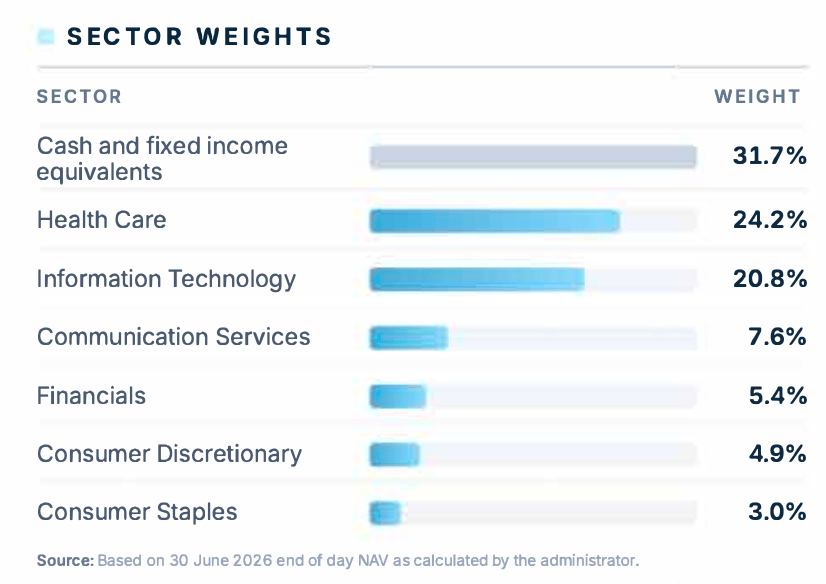
Note, there was also a 2.4% allocation to industrials.
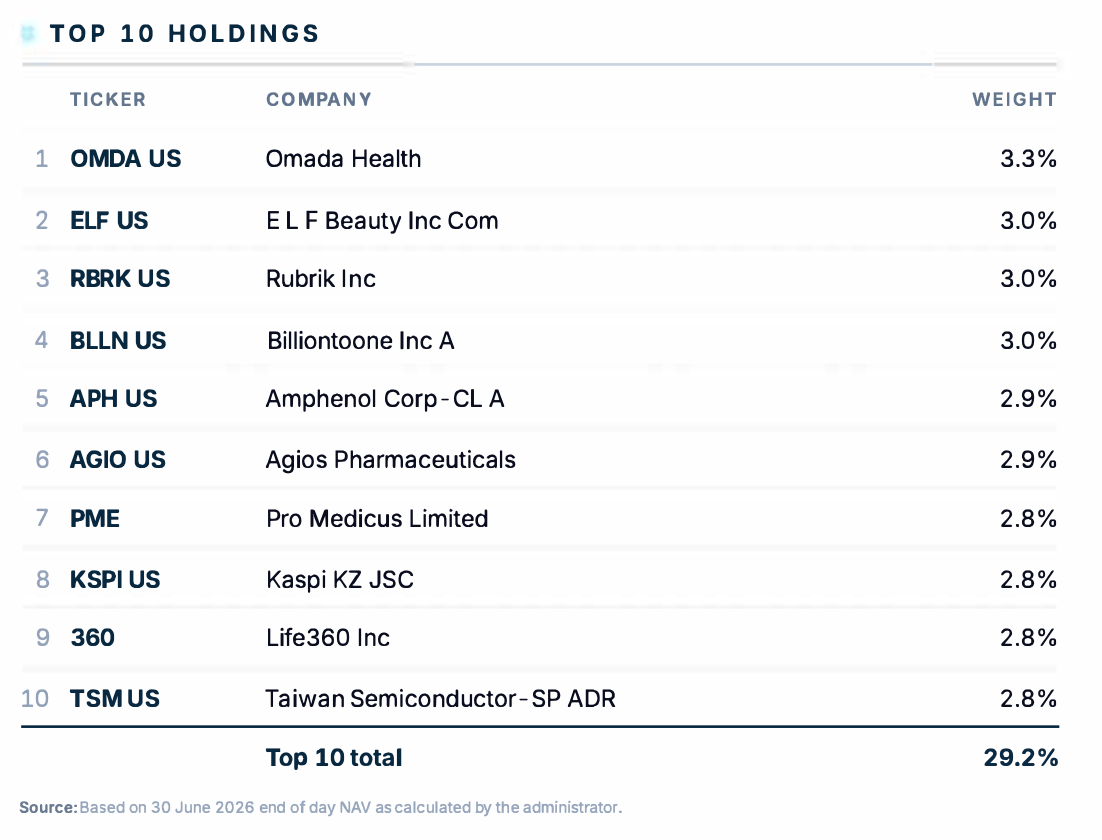
You will notice a few names we have not written about before.
Healthcare
The largest equity exposure was in healthcare.
Omada Health is a virtual care provider helping patients manage chronic conditions such as diabetes, obesity, hypertension and musculoskeletal pain from home, connecting devices, clinicians and advice in one platform. They are paid by insurance companies to improve outcomes.
We have seen many riffs on this theme, but are encouraged by their strong traction - 51% member growth and 42% revenue growth year-over-year in their latest quarter - and while the company is not GAAP profitable, the operating leverage is clear:
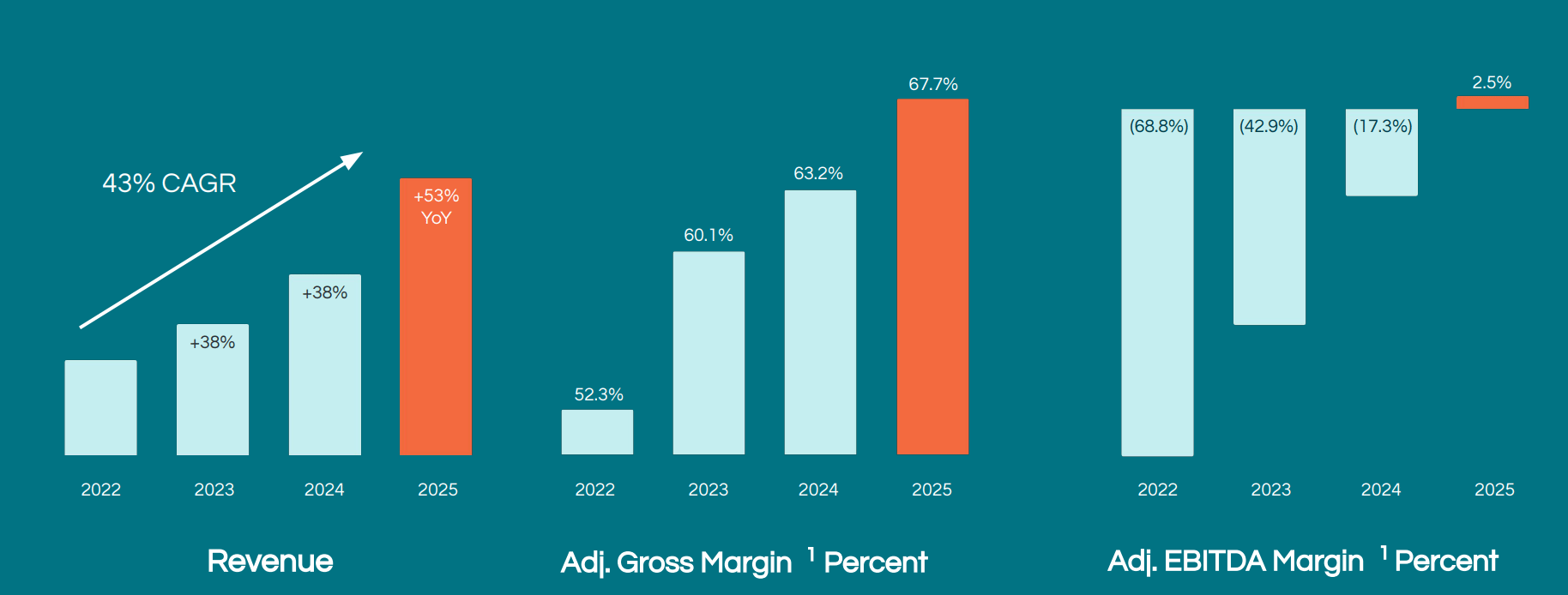
Omada revenue grew at a 43% compound annual rate from 2022 to 2025, with 53% year-on-year revenue growth in 2025. Adjusted gross margin rose from 52.3% in 2022 to 67.7% in 2025, while adjusted EBITDA margin improved from negative 68.8% in 2022 to positive 2.5% in 2025.
BillionToOne (BLLN) is a fast-growing company, with revenue up 84% year-on-year, using highly sensitive DNA sequencing to detect genetic signals. Its core products are Unity, a prenatal test assessing chromosomal abnormalities and inherited recessive diseases from a single maternal blood sample, father not required, and Northstar, a liquid biopsy platform analysing tumour DNA in the blood to direct and monitor cancer treatment.
The key differentiator is its ability to measure extremely small quantities of DNA with single-molecule precision. As always, execution matters to us most, and in a crowded space, BLLN is taking market share:
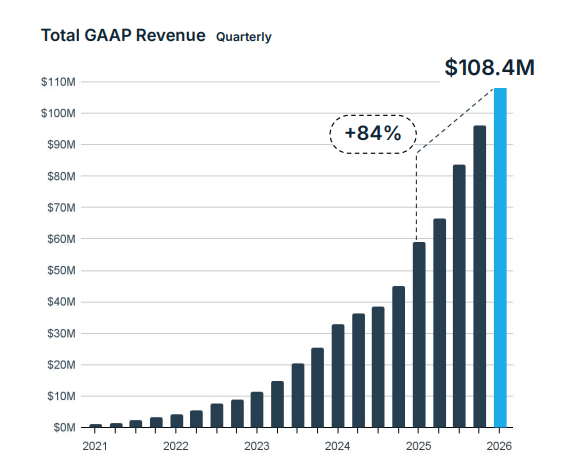
BillionToOne quarterly GAAP revenue rose steadily from 2021 to 2026 and reached US$108.4 million, up 84% year-on-year.
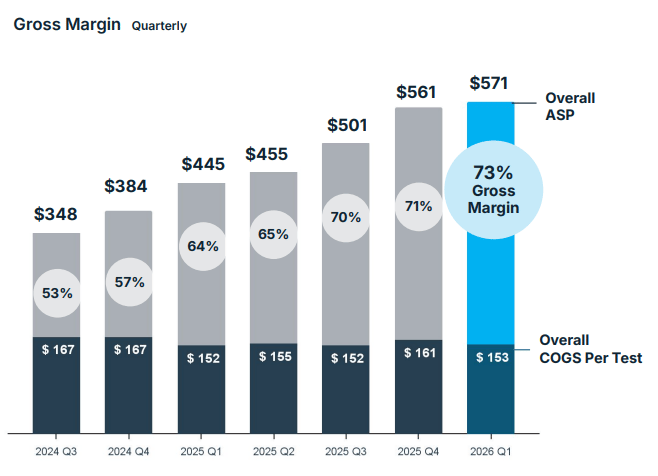
BillionToOne gross margin increased from 53% in the third quarter of 2024 to 73% in the first quarter of 2026. Overall ASP rose from US$348 to US$571, while overall COGS per test stayed near US$153 to US$167.
The company is GAAP net income profitable and raised guidance in its latest report.
Agios Pharmaceuticals turned up on our screens as a fast-growing company. There is a sweet spot post regulatory approval and post initial revenue, where the company has proven science, proven traction and an opportunity to expand its franchise. Often drugs that prove effective and safe in one area can be expanded into adjacent conditions, particularly as companies often start with a subset of their target market.
Agios is a rare-disease biotech built around activating pyruvate kinase, an enzyme that helps red blood cells produce energy and survive longer. Its lead drug, mitapivat, is already commercialised as Pyrukynd for pyruvate kinase deficiency and has now expanded into the much larger thalassemia market, while the FDA is reviewing it for sickle cell disease under Priority Review.
The hope is that Agios can use one oral drug across several genetically distinct anaemias and build a rare-disease franchise, rather than just be a single-product company, though of course there is risk around this and there are many players in the space. In the March 2026 quarter, product revenue increased 138% to US$20.7 million, but Agios remained heavily loss-making, with a US$99.1 million net loss as it funded launches and a broad clinical pipeline. The balance sheet is strong, with around US$1.0 billion of cash and equivalents.
Semiconductors and software
Amphenol is one of the better performing semiconductor beneficiaries, though you do not seem to hear about it as much. From their latest quarterly update:
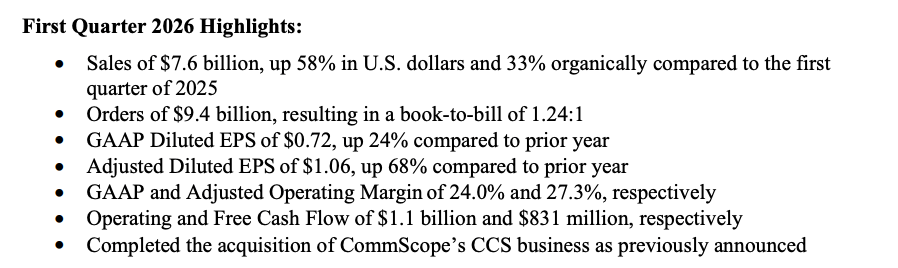
Amphenol first quarter 2026 highlights:
- Sales of US$7.6 billion, up 58% in US dollars and 33% organically.
- Orders of US$9.4 billion, resulting in a book-to-bill ratio of 1.24 to 1.
- GAAP diluted EPS of US$0.72, up 24% compared to the prior year.
- Adjusted diluted EPS of US$1.06, up 68% compared to the prior year.
- GAAP operating margin was 24.0% and adjusted operating margin was 27.3%.
- Operating cash flow was US$1.1 billion and free cash flow was US$831 million.
- Completed the acquisition of CommScope's CCS business as previously announced.
Broadly, we have waited for our quant system to generate fresh buy signals in semiconductors, which has kept the Fund out of many semiconductor names that we might otherwise own. We do hold positions in some of the larger companies like Amphenol, Nvidia, Broadcom and Taiwan Semiconductor.
Please note that we may change any of these holdings at short notice.
Rubrik is the only software name in our top 10 at 30 June. It is clear there has already been a SaaS recovery for the right names, notably those in security, networking, databases and direct beneficiaries of the enormous amounts of data generated by agentic workflows.
Application software names have certainly steadied, with many of the most beaten down companies like Atlassian and Figma bouncing off lows, but so far a sustained recovery has not taken place. These are the companies most under threat. Our best guess is that the companies that maintain growth stage at least a partial recovery later in the year, but so far capital is being sucked into semiconductor buildout, and rapid recent advances have rehighlighted the threat to these companies.
Outlook
From here we are focused on keeping our portfolio positions small, and holding a diverse range of growth companies with 2-3% initiation weights. At the moment semiconductors, SaaS and healthcare, as well as consumer names, are moving relatively independently. These are our largest factor and sector exposures.
We will release a factsheet like this to the ASX monthly, quarterly positions, and of course we have daily sector and cash holdings, typically with a 2-3 day delay. The 30 June position statement is currently under review and will be released shortly. The latest version can be found here. This is a live link so will change, but as of 23 July 2026 our cash and equivalents holdings were around 31%.
There has been a sell-off in semiconductors over the past few weeks, as discussed in the latest Frazis Fund update. If the sector stabilises this will be our primary focus in deploying that cash, but the range of possible outcomes in semiconductors is particularly broad right now, and our entry points will be quant-driven.
Good luck out there,
Michael
Disclaimer
This material is issued by Lioncrest Partners Pty Ltd (ACN 677 520 473), a Corporate Authorised Representative (CAR 001315184) of Frazis Capital Management Pty Ltd (ABN 91 638 965 910, AFSL 521445).
The Frazis Fund operates a different strategy and risk/return profile to the Lion Active ETF (ASX: ROAR) and is available to wholesale clients only, as defined in s761G/s708 of the Corporations Act. Any Frazis Fund performance shown is that fund's history only; it is not the performance of ROAR, which has limited operating history. Past performance is not a reliable indicator of future performance and returns are not guaranteed.
The Lion Active ETF (ARSN 685 354 518) is issued by K2 Asset Management Ltd (ABN 95 085 445 094, AFSL 244393). Offers are made only under the PDS. This is general information only and does not take into account your objectives, financial situation or needs. Consider the PDS and Target Market Determination, and seek advice from a qualified financial adviser, before making any investment decision. Investments carry risk, including possible loss of capital and currency risk. Unless a chart, source note or paragraph states a different date, information in this update is current as at 28 July 2026 and subject to change.
The Lion Active ETF PDS is available at lioncrestpartners.com/pds.